Практический курс Продажи на основе данных "Построить отдел" со скидкой 20% (39 000 рублей)
Промокод - dds39 https://clck.ru/3M5F3M
✅ Книга «Ценовое давление»: https://clck.ru/3Fodxb
В этом выпуске Георгий Картвелишвили рассказывает про экспертные продажи в B2B для тех, кто занимается добывающей деятельностью и для тех, кто продает тем компаниям, которые занимаются добывающей деятельностью.
Как правильно продавать свои B2B продукты? Как защищать цену? Как защищать маржинальность? Как ей управлять при продажах? И как сделать продажи маржинальными и эффективными?
В этом видео вы узнаете про маркетинговые инструментарии для решения HR задач
Таймкоды:
00:00 Вступление и общая стратегия
02:32 Жизненный цикл продукта B2B
11:12 Экспертные продажи
11:45 Account Based Marketing
14:11 Скоринг по Шиффману
15:57 Этапы скоринга
20:00 Total Cost of Ownership
24:41 Определение TCO на основе пирамиды Bain
25:44 Коммерческое предложение по ABCD
26:49 Как правильно давать скидки?
📈 Проведите диагностику корпоративной культуры организации с помощью авторской методологии Агентства Paper Planes: https://checkup-paperplanes.ru
📚 Полезные ссылки:
Наш сайт: https://paper-planes.ru
Академия Paper Planes: https://academy-paperplanes.ru/
Канал Ильи Балахнина в Telegram: https://t.me/ilyabalahnin
📩 Контакты партнёров:
Илья Балахнин https://t.me/ilia_balahnin +7 926 592 4877
Сергей Худовеков https://t.me/khudovekov +7 926 055 7715
Георгий Картвелишвили https://t.me/George_Kartvelishvili +7 916 336 60 64
Оглавление (10 сегментов)
Вступление и общая стратегия
Yes, colleagues, good afternoon everyone, glad to see you all. Actually, today we will talk with you about the topic of the problems of expert sales in general, B2B sales. This topic is suitable for those if you are engaged in mining activities or sell to those companies that are engaged in mining activities. If we talk a little about us, we are a consulting agency engaged in consulting, we have been doing this for more than 15 years. Among our clients are the largest B2B clients such as Severstal, Sibur, and many other suppliers, including materials, raw materials, equipment, including for mining construction companies. So, in fact, probably one of the most popular topics of the most important topics that intrigues our clients and, in general, companies in the market is precisely the problem of how to properly sell your B2B products, how to protect the price, how to protect marginality, how to manage it in sales, and how to make marginal sales, and indeed, many speakers, including today, talked about how to properly build marketing. What is proper PR in the B2B market, how to build an account, marketing, and so on. That is, a lot about this. Who talks about it. But in our methodology, we also have an approach to organizing sales, we call it expert sales, which are built To correctly advocate the price of ours and how to effectively sell it for your company. Of course, the sales strategy is largely speculation. What level of maturity does the company currently occupy, what does the company do, what does the company sell, and so on? In fact, choosing the right sales tactics depends, among other things, on what your product portfolio is, speaking of packaging the product, how to properly layout it, complex sales in B2B, selling complex B2B products is directly related not only to the competencies of sellers, not only to the competencies of your marketers, but also to how wide your funnel is, how much money you invest in marketing, and to how developed your current product portfolio is and what it represents. To correctly understand what sales are
Жизненный цикл продукта B2B
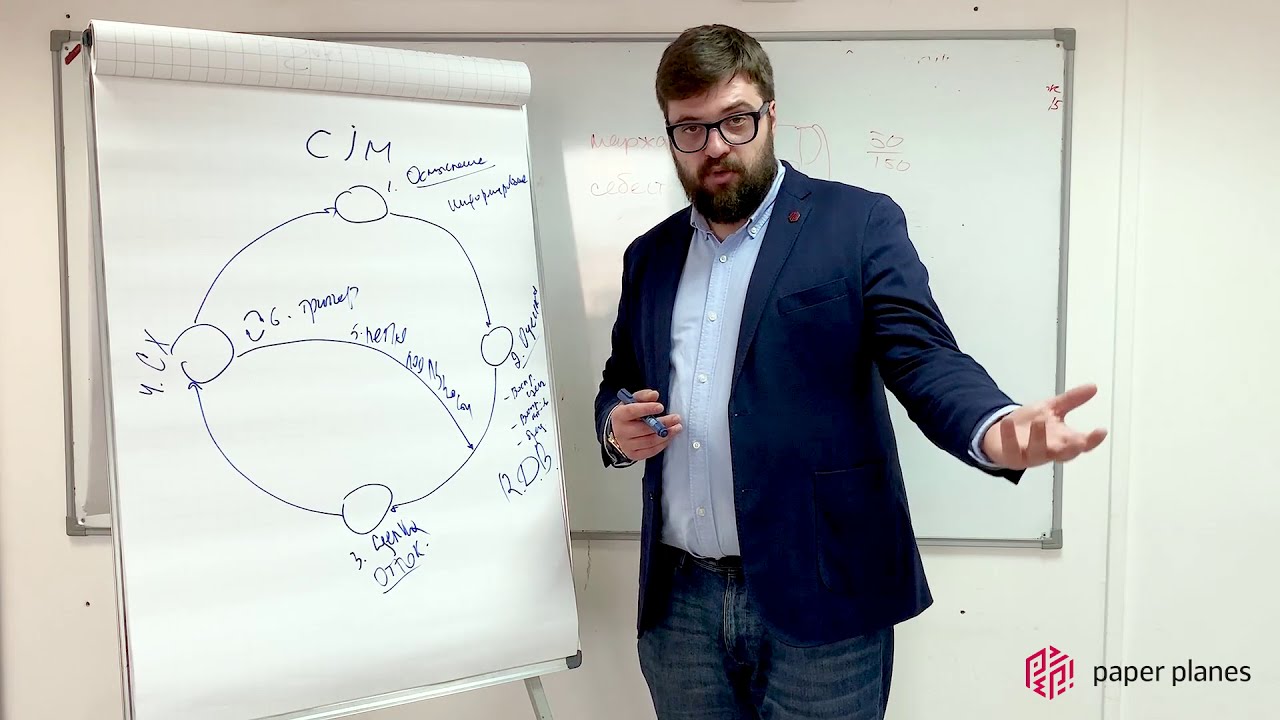
suitable for you, I'll draw a picture for you now. Usually, we'll draw on a chart that this is such a living topic, which essentially represents the life cycle of any product in the B2B market. It represents a kind of bell curve. If you're a mathematician, a bell curve is for you. If you're a humanities student, then it's the python that swallowed the elephant from the book, and the Little Prince by and large, what is this arc? In essence, this is the path that any product in the B2B market goes through. And in your current product portfolio, it doesn’t matter what you sell. Do you sell products that are extracted by processing, or do you sell products for mining companies, spare parts, equipment? There are temporary worker accommodation places, and so on. All these products go through this interesting arc. Let’s talk about what your egi Rani NOC is made of. When it appeared, you just launched it, the only one who will buy this product from you. What is called the rule of 3. Friend, friends, family, and fools. This is Rani’s product, which can only be interesting to your ardent fans and those who have known your company for a long time. Now let’s mentally move to the middle of this curve of ours. Right at this stage, this is the stage. When the product has already entered the mass market, it has become an industry standard, it has become either the best or one of the best products, and many people in the market are engaged in activities in which this product may be needed, they come for it and want to buy it specifically. As a rule, this product is clear to everyone, everyone knows it. It easily appears in technical specifications in annual reports. applications in design documentation in tender requests and so on. This is truly the best product on the market, the best product for its price. What is called A. There is a descending line that is already nearing the end. We will call this stage the Mainstreet, from the word main street. This is when the product was the best, but at the same time, some new technologies appeared on the market. This product has already had various analogs. This product has become one of those on the market that are presented according to this solution. That is, it is not the best, but not the worst product. Its marginality inevitably decreases. It is still bought, but they buy less than those products that are in the tornado stage. In general, it is one of the middle-of-the-road products that simply exists and is living out its life. Sooner or later, it will be outlived, or it will have to be customized for the rest of its life. For example, there are products of the 1C company. Or it will become completely obsolete and will have to be removed from the product range. The only part of our figure that we have not covered is the part that is in front of the increase in our curve. The most difficult stage is called the Flax stage, from the company name of bowling. What does this mean according to Su? They brought the product to NOC and only your most devoted fans buy it from you and the real mass NM mass is the best and so on, some time must pass and, as a rule, companies when they go through such a story make a global mistake. They immediately go to the mass market with this product forte. Here we have a new innovative product, come buy it, fly in, I think everyone would like to systematically capture their market share at the mass NOC, as is usually done, companies really take the product right away, then try to sell it to the mass market, nothing works and the product is taken out of the Matrix or try to sell it and it actually takes a very long time to sell. The problem is that when you introduce a product to the B2B market, you need to choose one, maximum two focus industries and segments and enter them, so to speak, product O and industry one. Then, when you first introduce this product to the market, and just received feedback from the market, then you scale it, you get product one industry 2 with this product, you go to another industry, maybe the opposite situation for the same industry, you do some customization of this product 2 industry, then there is a kind of development, product, industry 3, product, product 2, industry 2K, three, industry one. Thus, we get this expanding system of circles that looks just like the arrangement of pins in a bowling alley, hence the name bowling alley. What's interesting is that products at different stages of their life are of interest to different types of decision makers. Let 's see what. When a product is at the Tornado stage, this is the best practice on the market, the best product, the best standard. In all the documentation, GOSTs, and so on, it is prescribed to whom it is usually of interest. It is usually of interest to the buyer. The buyer is a person who works strictly according to the preliminary technical specifications. According to the tender specifications, he is interested in the best solution on the market. Therefore, when a product is at the Tornado stage, it is of interest to so-called technical buyers, that is, those who want to buy money. But they want to buy the best solution on the market at the best price, and just like that, a product at the Tornado stage is a product that is ideal for this. Therefore, if you have a mature product, it is in the Tornado stage, perhaps the best standards, it is indeed the easiest to sell. procurement If we talk about a product that is at the end of its life cycle, that is, it has become one of the very understandable simple ones, it is more likely that technical operators, mechanics, installers are interested in it. That is, those who directly work with this product with their hands, 1C and Accountant are not a bearing for the yoke of technical mechanics and so on, who work in the Quarry. Here is just the end user. And the last is the most difficult and the most interesting. And just the same products that are at the stage of kigel ban, which you are just bringing to the mass market, which really have not just quality as a basic characteristic, but this can give you some economic effect from the purchase of this product are of interest to those whom we call economic buyers or EP. Who is an economic buyer, business owner, CEO, executive director, operating director, head of a quarry, mines, and so on. That is, someone who sees himself not just as a task to buy a good product, but to buy what is called money for money, by and large, he sees from the purchase of a product not just a solution to a specific problem, there is no spare part, there is a spare part, he sees in this a specific economic benefit. That is, what he Buying a product will give him a KATO comic effect, the production level will increase, the equipment downtime will decrease, or some indirect operational metrics, for example, the throughput of a production line will increase, that is, specific economic or operational effects from purchasing this product. Why are we now talking about all this if our topic seems to be expert sales. In fact, sales tactics and strategy, as well as, in fact, a marketing strategy, are closely related to what stage of the product's life path is. If your product is at the kegel ban stage or you are negotiating sales with an economic buyer, then of course you will need expert sales, which we will talk about today. If we say that your product is simple and understandable, it is more likely to be of interest to buyers and it cannot even indirectly interest the so-called economic buyer. That is, it is just a product, bearings, for example, I don’t know, there are some components for other mining equipment, then of course, expert sales are not particularly useful here. Here, sales in a buy-and-sell format are more likely needed, the best price, the best quality, a guarantee, perfect compliance with tender documentation, and so on. That is precisely why before talking in general about how to sell correctly, what marketing mix to use, how to use a PR strategy there, a marketing strategy, and so on. Understand. What is happening with your product portfolio now, what does it consist of, what products are there, and most importantly, understand. How do you plan to promote them? If there are products that can create economic value or operational value for your client, they may be of interest to the decision maker, that is, the real decision maker, then of course you need expert sales. If your product is not of interest to these people, it is more interesting to the buyer, then of course
Экспертные продажи
you need the usual classic so- called transactional sales, that is, sales based on quality, price, and so on. What do we call expert sales for ourselves, which we plan to talk about today, we call a certain system of several stages, so this is how it works, interestingly, which just allows you to effectively negotiate with decision makers. So, sell them expensive marginal products that are beneficial to both the client and us. Actually, the expert sales process consists of
Account Based Marketing
seven stages, at least we distinguish seven for ourselves. The first stage is the so- called ACC account-based marketing. Colleagues asked me to talk a little today about marketing because you have There were speakers who talked about marketing, but we'll talk about this a little too. In what way is marketing actually different from other types of marketing? There's Targeted Context, PR communications, speeches, exhibitions, and so on. It differs in that marketing is more like shooting a sniper rifle, while other types of marketing are more like shooting a cannon at sparrows. And indeed, if you have a simple, understandable product and your task is to attract buyers, mechanics, installers, and so on, then of course, classical marketing will suit you, that is, where there is coverage, tools, such as contextual advertising, targeted advertising, capture tools, and NAV, there are mailings, materials, and so on, communication on the activity site. Indeed, this is really suitable and will be quite effective tools. But if you want to sell to a decision maker, then a completely different work tactic is needed. In fact, here we need a tactic that we call mating for ourselves. There is when we conduct a detailed analysis, we select. And in which industry will we lead the product to specific decision makers from the company, where it is mentioned that, for example, your product may be of interest, for example, your product allows you to reduce equipment downtime. So you find companies there that write about themselves that we plan to launch lean manufacturing there. We have a strategy for increasing efficiency, and so on and so forth, and you link to these news hooks, a solution in the format, you saw the strategy. We are just supplying equipment that helps reduce its downtime, and here is our offer, let's meet for coffee. This is really a long-term sale when we really find specific LPPs, contact them, offer them a series of meetings, and through this process, warm them up to the purchase of our product. Note that in this case, we are not just selling a product, we are selling a ready-made solution, that is, we are not just selling in the format, there are spare parts for you, we are selling a product that actually helps solve a specific economic problem of a specific LPP. In this case, for example, there is equipment downtime at a mining facility. That's actually what the matin consists of. I heard that many sleep. You were told about a technical feature. I will not talk about it now if it is interesting, but we can discuss it in more detail during the break
Скоринг по Шиффману
when we finally found these very LPPs and contacted them. Communication began. They became interested and submitted to our funnel. Of course, everyone can have their own sales funnel and many sales trainers, experts, and consultants talk about what a funnel should be, by and large. We say for ourselves that a funnel, by and large, can be whatever is convenient for you and your sellers and depends on the number of specific stages in your funnel. Little will change. Yes, it should be convenient, simple, not create bottlenecks so that deals do not accumulate there, but in general, this actually remains for your consideration, but in the funnel there is such an important story, such an important aspect as probable transactions. Probable transactions are a very understandable tool that not only allows you to clearly assess how many leads are actually in the funnel now, but also to understand how and with what probability which ones to do and for what amount with what probability they will come to you. Of course, the further to the right our Client is in the funnel, the closer he is to the contract, invoice, and so on, the higher his probability, therefore, by and large. If you are leading such a long battle Bish negotiations where you need to meet with the client for a long time, warm up the client for a long time, and so on, of course, well, here, the probability of a deal will be greatly facilitated there, not just sales planning, but also financial planning of purchases, because obviously. If you have some kind of equipment, you need to order it, bring it, make sure it is in warehouses, and so on. I clearly think many of you are concerned about the issue of availability and proper management of warehouse stock. This is exactly the story, this scoring, here, the probability of a deal where we have the probability of completing a deal. Let 's say the cost and volume of the ordered product are written inside the card. This will greatly simplify the planning process for both sales and related structures. When we are with you through the funnel, we
Этапы скоринга
talked with him, then we have the first stage of scoring. Scoring really sounds at first like a banking word, but at the same time, it is not at all a banking scoring - it is a tool that allows us to clearly understand how ready the client is for sales to purchase our product and how expert sales differ from regular sales here. In regular sales, we try to sell to anyone, that is, if the client as a whole is similar in request to companies that can buy from us. That is, these are not schoolchildren who just left a request for fun. That is, if the company somehow looks correct, most likely we will sell in expert sales, everything is completely different. In expert sales, there are four strict criteria by which the seller makes a decision. Well, or should make a decision on whether we go further with the deal or not. These four criteria sound very simple. The first is the budget, that is, in essence, how much the client is ready to buy the product for the money the product costs. Here, in fact, you don’t need to tell the client directly in the format our price is 10 million rubles. No, but through indirect questions, trouble with this counterparty through assessing the company’s turnover volumes, and so on. And with whom we are talking, the manager should make a decision, as if according to the budget, rather yes or rather no. The second letter is the letter, and this is essentially an understanding of whether we are often talking to the right person. Maybe it’s the case that we seem to have an interesting product for the Armed Forces. But for us, there was a purchase, this happens in business, too. I should say between the two if we communicate with the LPM by letters. And we put an assessment of Yes with the buyer communicates, that is, a technical person who, with a high degree of probability, will not understand the value of our product, we will make up No the third block is the need. That is, through the right conversation and the correct identification of the need, the manager must understand. In general, how much the client really needs our product. There is a strategy when Our task is simply to sell if we sell simple products, bearings and other spare parts, it’s too much trouble to sell, it’s better to sell because in any case, if the company is at least a little bit involved in this, it’s most likely to import. But if our complex, interesting, high-margin product, we really want to build an expert sale, then of course Our task is to understand. And to what extent does our solution generally clash with what the client has? If it doesn’t fit, it’s better to wrap it up right away so that there are no difficulties later on. Therefore, if the need matches, we put the letter Yes; if the need doesn’t match, we put the letter No. And the last thing is the time, readiness to buy now or time. Everything is very simple here allows us to understand. How much the client needs this product now and whether he is ready to buy it now or he is not ready to buy it now. We also put either Yes or No. And here, in fact, the most resonant conclusion appears further. If the client typed at least one letter and received the answer " no", then most likely we will not go into a deal with him right now because, in fact, he is not ready for this deal. You can cheat him, you can meet with him, you can live him out until he reaches the LPR and so on. But in fact, now he is not ready for a deal and sooner or later in the future, at deeper stages of the Funnel, he will still fail, or he will take a very long time to get it on his mind and in the end, they will either buy something cheap, or he will strongly object, or they will not buy at all. Therefore, a really important principle of expert sales for those who have not passed this scoring, we do not sell expertly. Indeed, if a normal buyer comes with a normal request with money, you want to buy some of our product, but in fact, you can take him to another funnel to understand that he just needs to sell this product, but this will no longer be an expert sale, it will be a regular transactional sale, just a good lit came, sold, in fact, everything is great, but this will no longer be an expert sale, therefore, Why do we always our clients We recommend implementing such a history in your CR system because this history allows us to understand how complex our deal is, how targeted the client is, and what tools we will need within this deal to successfully close it. A very important and useful tool, now we move on.
Total Cost of Ownership
Once we have actually completed the client's scoring, negotiations begin, the price discussion begins. It is probably time to use the most important and complex tool of expert sales, which is called the total cost of ownership or the concept of total cost of ownership (TCO), which is more convenient in Russian, in English, what does it consist of? Of course, expert sales is the main tool. How to sell your product for more money. But as a rule, our clients and, in general, those who listen to our lectures have a question. How to sell for more money if prices are lower on the market? We are not in the market, we are expensive, they put pressure on us on price. And the answer to this question lies within this tool. I will explain. Why? Let's imagine that you have a product that costs, say, 5 rubles. The cost of the product is 5 rubles, but as we probably know. And I think we have often encountered this ourselves, because if you sell something on the B2B market, it is obvious that something needs to be bought. It is not enough just to buy a product to start using it, it began to bring you at least some effect. You also need to tinker with it, train the staff, make them use it, make them work, make them read the instructions. make everything do the right thing, track what they 're doing right, just personally start using something, buy someone, train them, that is, in general, the entire volume of the brain is chewing gum, if I may use censored language, it can be expressed in money, it can be expressed simply in time in hours, the amount of defects in the early stages, and so on. Something is actually worth it for the company, just there are companies that... This is well considered, for example, by IT specialists, that is, IT specialists understand very well if we implement complex software, it's expensive, but we still need 20,000 hours to train everyone to use it and start it working properly. Of course, companies that work in the B2B market, thank you. They, of course, consider this much worse. So, by and large, it turns out that well, we have the cost of the product. And there is what is called the cost around the product. That is, the total cost of ownership. That is, you spent 5 rubles on the product. And you will have to spend another 5 rubles so that the product actually starts working. Total 10. And what does an unscrupulous transactional seller do? He says, "Well, everyone on the market has five, but we have four. Buy everything from us." super Here But when you ask people a question in the format And what's here, outside, they're like, don't forget 4 rubles What are you talking about, well, and that's how they sell It's true, this is a strategy that's valid for good horse sales if the product is simple, that's how it should be done, great if it works out, but what does an expert seller do? An expert seller tells us Yes, everyone on the market has five, but we have six, yes, it's more expensive, but we calculated all the sources of loss of money that you have during the use of the product, and with our product, your total cost of ownership will not be a Total 6 + 39, that is, an expert seller shows how by buying a more expensive product you can save yourself money and time in the future, thereby meeting the more needs of an economic buyer, that is, he definitely says Yes, we are more expensive, but we know how companies like yours are experiencing What problems are there with equipment and supplies, we have calculated all this and taken it into account in our product Buy our product, it's more expensive, but you will spend a lot less time, resources, and money using it so that it will quickly bring you to the desired result What if we are talking about In negotiations with an economic buyer, the interest is always in the result and what effect this product will give. This is how an expert seller operates. That is, he effectively hides the price due to the fact that he correctly understands the components of the total cost of ownership and puts pressure on them in negotiations. This is what is called an ex- sales strategy. This is exactly what a transactional seller does. If you do this, you are an ordinary seller. You are probably very sad to live. If you do this, then you are an expert seller and your clients are doing well and you clearly have very good margins. In fact, the goal of all our exercises, which we have gathered today, including How to correctly identify the components of the total cost of ownership is to understand its goals and understand the business. Of course, yes. It is very important that BB managers are not so much humanities students who sell with a saber on their heads, but rather former techies who understand the product well. But our colleagues in
Определение TCO на основе пирамиды Bain
the eighties from the company's consulate, comp. Now, not in Russia, I am partners. Once they came up with a model of a pyramidal structure, which, like KI, shows 48 possible NOs, which. The names may seem strange in the format of what is interesting, calm, obligation, social responsibility. Nadezhda. Here. But these are, of course, translation costs, by and large. Everything you hear in negotiations can be heard, correctly identified, and broken down into this pyramid and understood. What is really valuable in your visa negotiations? What can really make you buy a more expensive product? Be ready to invest in you and your product. Now that we've done this, it's a question of tools to identify this. There are excellent methods for spin questions. I think many of them know about them. If you don't know, the book by Nila Rekha, Spin Sales, will help you since there's little time left. I skimmed through this slat. A
Коммерческое предложение по ABCD
great format for negotiations is the structure of commercial proposals in ABCD logic, where you show, on the one hand, the letter A, and the main value of your proposal in one succinct phrase. The book's advantage is yours as a partner. The advantage of the product. It's not reviews, not company logos, but case studies in the format: the company came in, oh yeah, and hooves with such-and-such a request, they delivered such-and-such a product. Here's what the effect was: line productivity increased by 40%. That's a case. Everything else is not a case and would rather be beautiful slides, but it won't work. Well, and After you give him your number, he will contact you, we will issue a contract, an invoice, we will start working. An example of an effective commercial proposal that really works and converts B2B transactions well. A little about cop Georgy, a couple of minutes. Yes, a couple of minutes. Super, since there is not much time left. I will probably tell you about two more things, but we can talk about the rest during the break. And when do
Как правильно давать скидки?
you have your current clients? Is it important for you to understand how pricing and discounts are given to them? Of course, discounts can always be given in the format of discounts, I will give discounts, but you can give discounts more competently. To understand how to give discounts, there is such a class tool, the second type of scoring, which we call BCG, which essentially allows you to evaluate the client's criteria based on two criteria: relationship criteria, how friendly we are with him, we know, we understand his technological process, he depends on us, he loves us very much, price, not sports, and so on, and specific commercial marginality, the potential for growth of the client's business, his growth potential, our share in the matrix, and so on. Based on these two factors, we can definitely make a decision on how much this client is there, a) loyal, b) commercially effective, and those who are loyal and commercially effective should really To get good discounts and good commercial conditions, we should incentivize those who are simply average. They should receive normal prices and occasional incentives if necessary for business purposes. If the client is not very loyal and not very commercially effective, then most likely he receives the toughest market price, that is, he buys well. No problem. And then we showed you and we have a certain concept of how to properly build a sales funnel in the B2B market. We adhere to a concept called 4r. We have a lead funnel that ends precisely at the ban scoring stage, which we discussed today. There is a sales funnel where you identify the components of the total cost of ownership, structure the commercial proposal according to ABCD logic, and conduct negotiations. There is a RE funnel, this is precisely the funnel where you develop relationships with your clients through progress in the format of visiting production, learning about business tasks, attending a strategic session with the client, learning his goals and plans for the year, and so on. That is, in essence, a funnel there for farmers. As is usually also called, that is, the customer development funnel, and the last stage is the refresh funnel. Here our letters B and Ant appear again. This is precisely the heating funnel for those who have not passed this initial scoring until they have passed the budget, the required decision maker, the need, and so on. This is the heating funnel where we warm up our clients, send them useful materials, invite them to webinars, and so on. This is how the correct funnel is organized in the B2B market so that you can effectively and expertly sell and transactional. As colleagues suggest, I have almost no time left. Therefore, if you have any questions, we can discuss them during the break. We are engaged in just these kinds of projects and we implement such projects for many companies that are involved in the mining industry and supply mining companies. Thank you very much to everyone. Have a good evening.