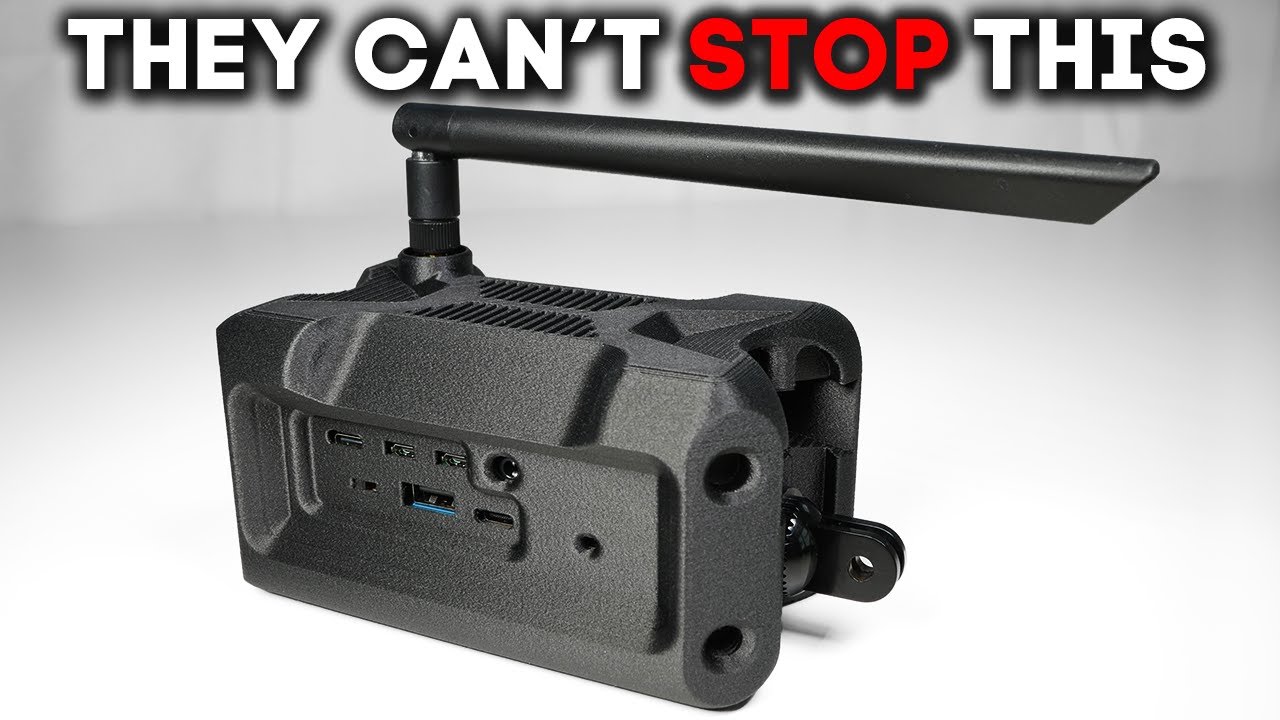
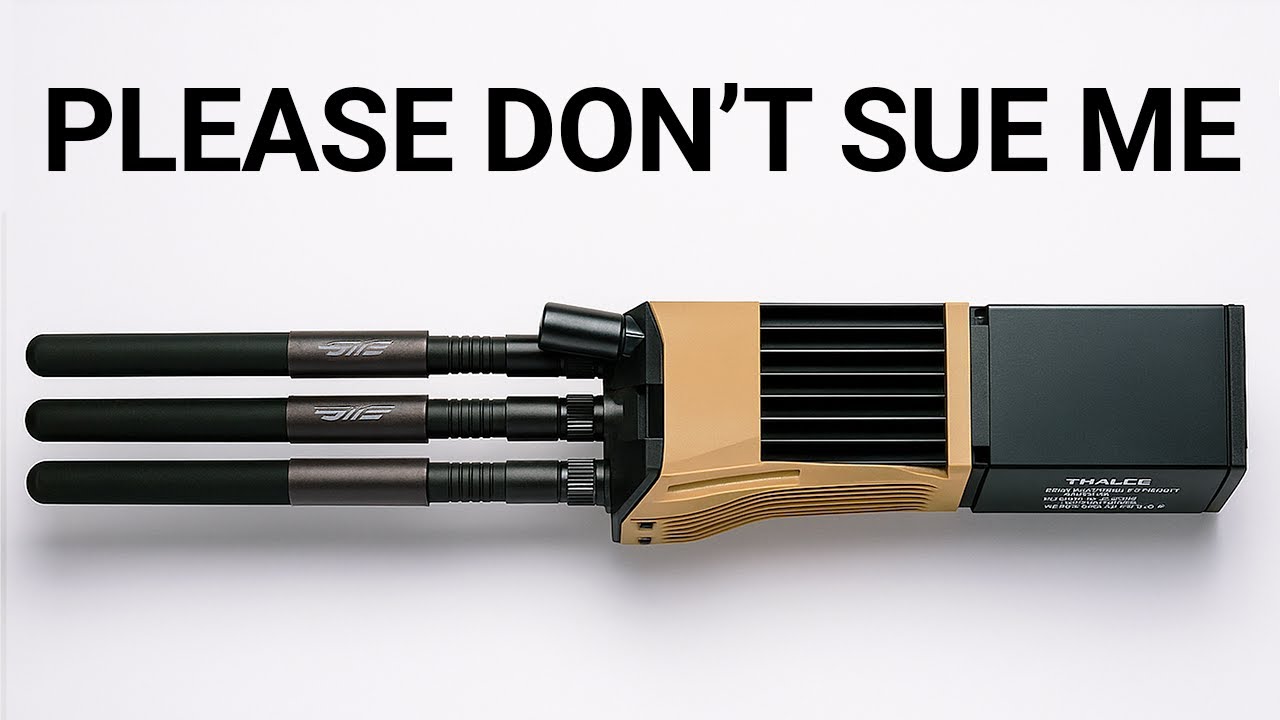
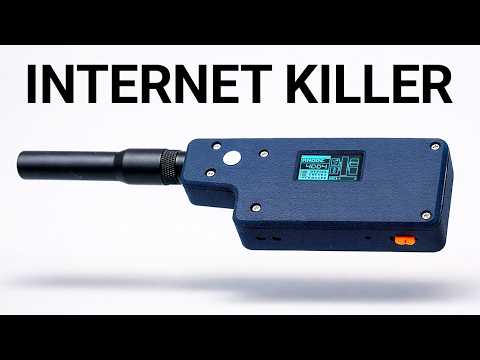
This microchip can extend your Wi-Fi over 10 miles. And we're just getting started. Tiny, cheap, and unregulated, these devices tap into a new flavor of Wi-Fi. Long range, low power, and built for IP mesh networking. Each one acts as a node in a decentralized swarm of IP mesh radios, routing peer-to-peer data in real time across rooftops, in backpacks, and even drones. And the most exciting part, it's barely been touched. This is wireless re-imagined. Tech like this flies in the face of everything big tech is pushing right now. I'm talking toothbrushes with subscriptions, dishwashers that need Wi-Fi permission just to run a cycle. It's a regressive trend that might look good on big tech's income statements, but it locks us into endless fees. That might be the default path, but we're building in parallel because this you can actually own. You can open it, repair it, reuse it. You can teach your kids how to use it, and how to make it better. It's open and it's yours, which is something this channel really supports. Today, Wi-Fi is something we fix to our residents or place of business to give local devices a connection. But tomorrow, Wi-Fi could be something that roams with us into the mountains, on kayaks, out to the most remote places we travel. To prove exactly how Wi-Fi is evolving, I'm going to build something that's never really existed for the consumer before. a mobile peer-to-peer Wi-Fi mesh with no towers, no satellites, and no centralized control, just small IPbased mesh radios moving and routing packets in real time. And doing it with all off-the-shelf parts that anyone can buy. Technically, it's called a mainet or a mobile ad hoc network. And with this setup, every device is a node, and you create a decentralized swarm that keeps itself alive, even if nodes drop out. The military has been using this tech for years. Devices like the MPU 5 is battle tested. It's literally built for war zones, but it's also priced like it. You're looking at 15 to 20K per unit once you factor in software, antennas, and licensing. But this, it's a smaller architecture, just under $50, open-source, civilian grade, but suddenly possible. For years, systems like these have been locked behind defense contracts and big budgets. But now, pieces of that puzzle are bleeding into civilian hands. And we can piece it together, serving as another nail in the coffin for a truly parallel wireless network. But theory is one thing, and reality is always another. So, I'm going to be testing it here in Bickl. I'm also going to go more remote to some of the islands surrounding the area to test exactly the limits of this tech. But the stakes here aren't just academic. And I always consider the implications of tech like this on how it might affect my life. And as a quick anecdote, my best friend and I like to hike the White Mountains in New Hampshire. Specifically, we like winter hiking. It's absolutely stunning. It's dead quiet with the snow, but it can also be brutal. There's no phone signal, and -20 windchill definitely ups the ante up there. Getting lost or injured, even for a few hours, can be fatal. And not because people are reckless, but because mistakes happen fast, and with help out of reach, it's really easy to underestimate the elements. That's why tech like this matters. I'm not saying it's a fix, but if a tiny off-grid mesh node could shift the odds even a little, that's worth exploring. But let's be honest, maybe there's a reason people don't use this stuff. I mean, Halo is barely supported and ATAX meant for military radios. My worst fear is that tools like this give people a false sense of security and ultimately are unable to deliver. But I guess the only way to truly know is to give it a try. One of the things I love about this project is it's pure open-source. So that means you buy it once and you own it forever. There's no licenses, no cloud login, no gatekeepers. If you want to mod it, you can flash your own firmware and just have at it. This thing is built for control. And then I'm going to be using this as my Halo roaming client. And all it is a Cow from Seed Studio. to an MCU with a Wi-Fi Halo adapter and an FPV camera. Um, I will need power for this obviously as well as the antenna. I will need power for this. Um, you could use a power bank or something like that. I've been messing around with these 18 uh 650 batteries
Segment 2 (05:00 - 10:00)
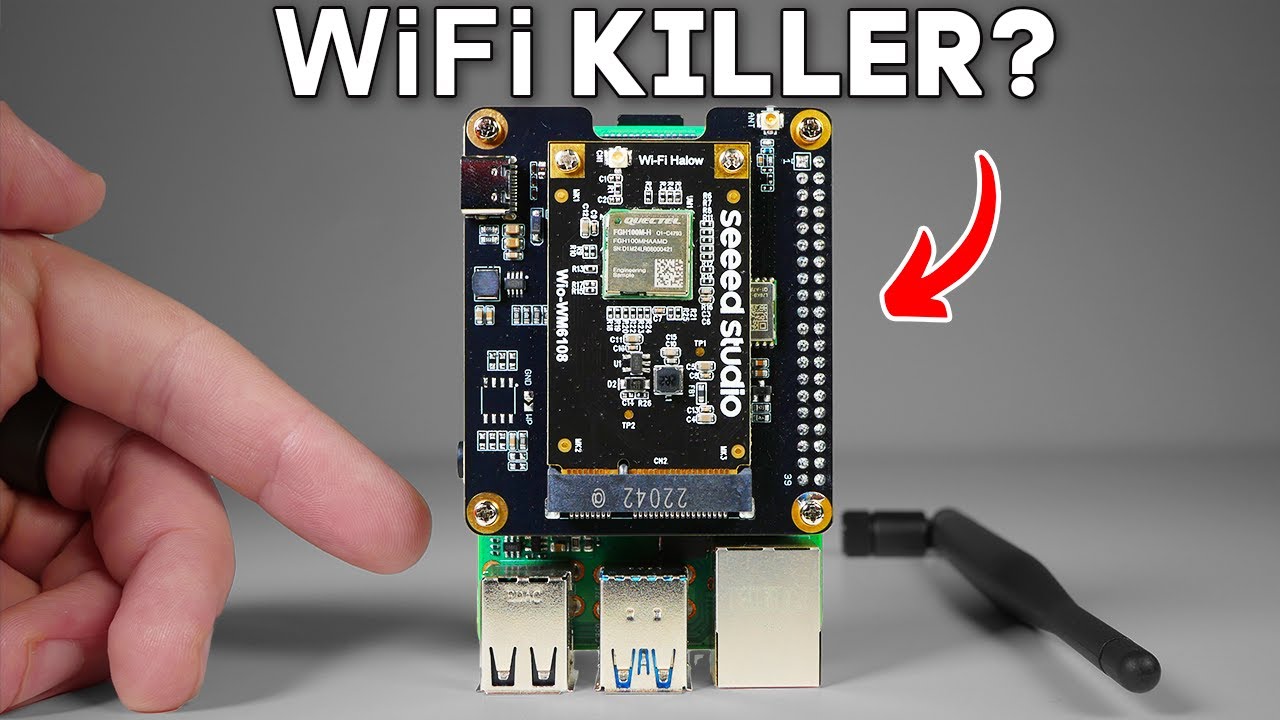
and been having a lot of fun with them. And this one has a USB connector here. So, actually, um I can actually use USBC to power uh to power the MCU, which is what I'm going to do for uh for this video here. But basically, this board here has enough code to generate the uh video stream from the FPV. Um and expose it over an IP address. Um, and so really once I have uh the video stream going with this, this can go, you know, like a mile away from the router uh which really um opens up a whole new world of possibilities um because it uses traditional IP networking and uh has the throughput to be able to support even like lightweight video streams and things like that, which is something that Mishtastic and Laura just can't quite do yet. So, in a future video, I'll build a proper mainet and we'll actually show Halo like on the move, but I just wanted to demonstrate here that like it's even like theoretically possible. And I do get it working in my apartment here. And basically like I live stream a video over Halo to ATAC, uh, which in and of itself, I think is pretty impressive. And again, guys, just to reiterate the setup here, right? um because there's lots of moving pieces and uh I don't want you guys to get lost, right? So, basically what's happening is um the router that I use is the UniFi Express. That's my home router. Um this device, the ATAC device connects to the UniFi Express. Um and it uses 2. 4 and 5 GHz bands uh to connect to that. And that's all well and good, right? So, I have my home network and um this is able to connect to it over Wi-Fi. Fine. But where does Halo come into the mix? So, with Halo um you know depending on the setup that you have, every device that needs to leverage Halo needs to be have Halo essentially. It needs to have either a Halo client or uh a Halo access point essentially. So, what I do is I make my Wi-Fi network, the UniFi Express network compatible with Halo with this setup here. This is a Raspberry Pi with a Halo chip and a Halo antenna. And all I do is plug it into UniFi Express with Ethernet. And what happens is it basically extends my UniFi Express um uh ch uh frequency and but it keeps everything uh with the same IP networking in place. So basically if another device broadcasts itself on the Halo frequency then anything on that UniFi network can access it. So basically this setup right here just Wi-Fi halos enable it. It enables Wi-Fi Halo on my UniFi Express um Express router. Now, um it's not actually going to do anything with that Halo until there are actual clients broadcasting themselves on Halo. Enter the cow, right? This is going to be one of the clients. And so where you can introduce distance with Halo is between Halo clients, right? Um, so what I could do in theory is I could take my confined Halo roaming client here and because this is set up to uh connect to this, you do a little SSID handshake. Basically, you just put the SSID username and uh password into here that you set over here. And again, once these can connect to each other, anything this exposes uh in terms of an IP address is available to anything, not just the Halo, it's available to anything on the UniFi Express network, aka ATAC. So, what's going to happen is I'm going to pop open a tac on this and it's going to be able to open a video stream directly uh being broadcast from this device even if this is like a mile away, 2 miles away or whatever because they're just all being daisy chained and it really works. Um, I was able to uh set up a video stream using uh the HTTP protocol because that's what this uh is set up to use. This spins up a webcam on uh an HTTP uh very lightweight and I can share that code with you. uh but then this streams it directly and what's really happening is this is making its HTTP web camera server um available to the entire network because it's can send it to the access point and then the access point uses Ethernet to plug that into our broader UniFi Express network which this leverages. So again, I'm going to make this more simple and come up with an actual mobile ad hoc network setup using Wi-Fi Halo, but here in my apartment for
Segment 3 (10:00 - 15:00)
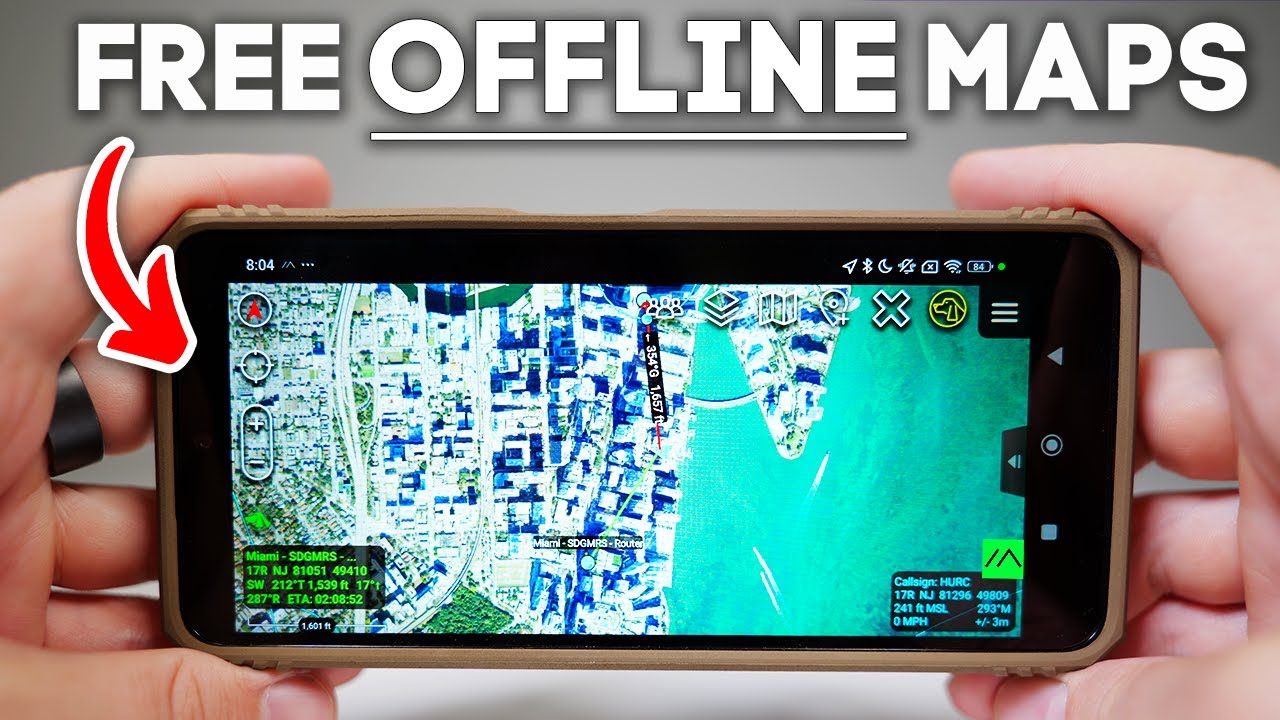
the sake of getting this video out the door, um I just wanted to demonstrate that it is in fact possible. And the fact that we're able to do a video a live video feed uh with a wi with a Halo client that isn't even a real SBC. It's an MCU. It's working with like a quarter megabyte. no RAM, no storage. Um, and it still works. It just to me it just proves how good this tech is getting. Like the Chow is literally like a $6 board and it can support stuff that like uh those $1,000 ubiquity routers can't really dream of. So, um I mean we're getting to the place where some of the stuff that has been reserved for like military setups and Department of Defense and all that stuff is more accessible to the lay person, which is something that uh really excites me. So, definitely check out the guides in the description below because I'll walk you through exactly how to set all this stuff up, provide links to gear, and some back channels if you guys have questions. All right, let's get this thing online. Okay. So, what we're trying to do here is set up a mobile ad hoc network. So, I have ATAC going on this device here. I have a 2. 4 to 5 GHz uh local wireless router here. This is going to be our central uh WAN network. So, our central wireless network. However, this does not have um any sort of long range uh radio capabilities, right? This is just 2. 45 GHz. So, that's where we're going to actually connect the um Raspberry Pi with the Halo Hat, which is going to bring Wi-Fi Halo to the party. And then we do have a client, so we can test like how far we can go away with another uh Wi-Fi Halo chip. And we're going to basically try to stream video uh in a very remote area out here and see how far we can go. Now, this is not a true mainet uh due to one point, which is that it doesn't have mesh networking. And we're going to do that in a future video. But we're going to put uh the main open source software is called Batman. We'll throw that on the Raspberry Pi. Um and then it'll have uh true mesh networking with the um 802. 11s, I think it is, or um but anyways, it'll be able to do mesh networking with the Wi-Fi Halo protocol, which is kind of the um the grand vision of this whole thing, and it's kind of the true mainet. But this is going to be um just uh kind of a base level example. All right. So, we have the UniFi Express, our base wireless network. We have power. This guy has to have uh what is it? Three amps, I believe, in order to power this thing, but it looks like it's working. And then we have our Halo access gateway, which is connected to this. So, everything Halo picks up will show up on uh our Wi-Fi network. The Halo antenna. Luckily, this has a uh magnet, so that just sticks there. But, we need to power this guy. So, I'm hoping I can get that done with this. It's I've I got it to work back in my office. It doesn't fully support the level of power needed here, but uh I'm hoping for the best. So, I'm going to go ahead and plug this guy in. We do see some lights come on. So, that looks promising. And then I just have the T1000E to bring uh some meshtastic to the mix. And I'm going to see what that looks like on my phone here. So, I have um yeah, this is like a fake Samsung Galaxy. I got it off Teu, but it runs Android. Should get the job done. Um let's see if we can't get this going here. The thing is I want this to get I want I need to put this on uh that Wi-Fi network. Okay, so I just joined the network here. Um so, this guy is on this local network. So, I go over to ATAC. Okay. So, we can see um we can see the map. That's all good. But I should be able to see um my other phone. So, let me uh turn that on real quick. Okay. So, now we see my other device here, right? So, this other device is literally the iPhone that I'm shooting this with. Uh I kind of forgot my other device, unfortunately, but still makes the point, right? This is one ATAC device. It's on our mobile Wi-Fi network here, but uh this iPhone is also on it. So, I should be able to send messages. I'm going to go Hello. Okay, so this sends a message. And then I'm going to look on my iPhone to see if I received that message. And I just took a screenshot. I did receive this message. So now again, any ATAC devices that are on this network can now communicate. They can message. Uh they can also do other things like they could send video streams. They could share maps. They can superimpose uh drone feeds onto the maps. Um so there's quite a bit that they could do. Um but they just have to be on the same network. But the question is we're out here, right? This is our network. So if you were on a hike or you
Segment 4 (15:00 - 20:00)
were um on a kayaking trip or uh doing some sort of search and rescue, um you need long distance, right? And that's where Meshtastic really shines, right? So, you could give everyone one of these and now um uh now you have long-distance radio and you're adding that to the party, but it's not true IP networking. It's kind of running in parallel to the actual um ATAC system. So, what I would do is actually introduce Wi-Fi halo, which brings true um true uh IP networking and then true uh mesh networking and long distance. Um, so I if all your nodes in your um in the ATC network had Wi-Fi Halo, um, I mean they can do everything they can do over IP. I mean you could go to Instagram uh provided one of them has like a down link from like Starlink or something like that, but they could send video over long distance. They could do all that stuff. And so actually that's what we're going to do for our little example here. I have this guy. Now, this is super lightweight, but this is a Halo chip with an FPV camera on a cow with a antenna and a longdistance antenna. So, uh, and I'm going to try to get that going here in ATAC itself. So, you go over to settings and then um video and then I've already set up the configuration here. Uh, I just need to theoretically power this guy on. Now, I've been having a lot of fun with uh these batteries. This is an 18650, which is a fairly common battery, but it has a USB side port uh which is actually quite practical. Um, so I'm going to go ahead and uh plug this guy in. Okay, so what I'm basically doing is uh I'm just going to power this guy on. It has all the firmware. So, right when it powers on, it should start a um an HTTP stream uh camera ser uh server, and I should be able to pick that up on any of the devices on my network, frankly, but also right in ATAC. So, that's kind of my goal here. Okay, hopefully you can see that. But, um we do in fact have our uh Wi-Fi Halo uh client going and we are using our mobile ad hoc network. We're out here in the middle of pretty much nowhere and it's streaming uh live video directly to ATAC. So now the question is like how far away from you know this whole setup can we actually go and uh continue to get a signal. So that's what we're going to test. All right. So, we have our super janky little um Halo camera here. And you can see that it uh is sending a stream to ATAC, but our network, this is what's interesting, our network is out here. So, my question is, how far away can we bring this guy and uh this can continue to get video? So, that's what we're going to test. Okay. So, we can see the car right there. Right. So, that's node number one. This right here is node number two. We're streaming video, which is pretty high uh a high bit activity, bit rate activity, and we're just trying to see how far it can go. Um, using Wi-Fi Halo. In the future when I do this, I'm gonna have two true mainet setups and everything should just be using Wi-Fi Halo under the hood for like all the networking IP networking stuff and it should just bring long range to the party. And uh right now we're just like doing a direct video stream. But um when I do the uh future video um we're going to have two true mainetss, IP mesh networking, Wi-Fi Halo 802. 11s, Batman, etc. So uh that'll be more plug and play than this. Okay, so we have this guy going right here. And that second node is all the way over there. That first test actually worked and I went all the way to um the other side of that big football field. Um so I need to actually push it further because that worked. But what I'm thinking now is maybe I'll keep the camera in one place and then drive the car beyond to see. Um maybe that'll work. I just don't want everything falling off here. So let me figure this out. All right. I think we're going to have to settle for that. So, let's make sure that the stream is still going. Okay, so I think our stream is still good as far as I can tell. Okay, so I'm running ATC in my car. This
Segment 5 (20:00 - 25:00)
is my mainet network. That's a UniFi Express router. That's a Wi-Fi Halo gateway on a Raspberry Pi. And that camera feed is coming from that tree right there. That's a cow. Remind me not to open the sunroof. And I go like this. I can wave and you'll see me. That is me out there. And let's go ahead and see we can keep this stream going. All right. And we should see the car cross. Oh god, it's probably cross in a second. Um, let's see. Moment of truth. There I am. Still getting a live feed. That's over Wi-Fi Halo. So, let's push it a little bit further. Um, it will stop streaming when it stops working. So, let's see how far we can get this. Still getting feed. And we're going directly away this time. Still getting a feed. All right, I'm going to pull in so we can do a little comparison here. So, you actually should be able to see the car at some point. Let's see here. Yeah, you can see that car. So, we're still getting a feed. So, let's push it. Push it further. If you want to see how far we are, we are we're getting a feed from it's going to be all the way basically towards that green fence down there. So, it's pretty far. All right. Now it's giving us a little bit of trouble. So I think we might have hit our limit here. Okay. So we set up our poor man's mainet and we got it working in a very remote area uh along the water here in Miami. And we did set up a uh Wi-Fi Halo FPV camera. So, fairly high bit rate uh use case streaming video. Um, but we were able to get that to work uh I would put it at the limit of 1,500 ft. Um, so, you know, more impressive than offthe-shelf Wi-Fi routers, but not quite cut it for um like search and rescue teams and things like that. Now, that being said, there's quite a lot that we can tweak to uh make this more appropriate for those sort of search and rescue or even more remote off-grid activities. Um, for instance, uh, Wi-Fi Halo supports different channel widths and the lower you go, the more distance you get, although the less uh throughput. Um, so there's quite a few things we could do, like for instance, we don't need to be streaming video necessarily, or we could stream lower bit rate video. Um or we could try those lower channel widths like 2 3 4 even 1 megahertz and technically that should go further also for this range the sub gigahertz range which is things like Laura and Halo and stuff like that talking around 915 MHz um the most that you can do in terms of power and power is one of the big drivers of range right the power of the antenna and that sort of Uh the most you can do is one watt of power which is the equivalent of 30 dBm. Uh now interestingly this hat that I have the seed studio hat with the uh open WRT image that was generated by seed studio uh was running at 21 dBm. Uh now I spoke with someone who reached out to me who was able to create a uh another image for the Raspberry Pi using the same Halo chip and actually using the um the mesh networking as well. Uh and he was able to modify the software to bring it up to 27 dBm. So I'm going to use his uh firmware in a future video to see if we can get more distance, but I'm also going to mess with the those
Segment 6 (25:00 - 30:00)
lower channel widths uh to see if we can get Halo to go further. But I'm also just going to do a proper mainet. This isn't really a proper mainet. There's no mesh networking. Um, we did a very kind of rudimentary uh proof of concept in terms of streaming the actual video. Um, and what I want to do is have uh a mainet that can support 2. 4, 5 GHz, Halo, and uh kind of I guess Laura through the back door um using the Meshtastic plugin. But really, I want to rely on Halo for that long distance and um tweak it so that maybe it doesn't have to do video, but it can do telemetry. And that telemetry data is far easier to transmit and therefore we could probably send it uh a lot further. So, um that video is going to be coming up, but I did want to just kind of give you an introduction to what these sort of mobile ad hoc networks can actually do. And it's quite impressive that I kind of uh rigged this whole thing to run on the car and then the car was moving around uh and it was able to get a connection. And again, this is all like inexpensive hardware. Um Raspberry Pi is $35. The antenna is $5. Um the uh Halo chip is $15. The hat is I think another $15. Uh this is just an Android device um that I got off of uh funny enough teu. with the Xiaomi device. Um, I'm running the APK that I got from tac. gov. So, no middleman, no Google Play Store needed. Um, the case is I um I bought this case off Amazon and then I spray painted it with a flat dark earth spray paint and I don't know, I actually think it looks quite nice. Um, so to me, one of the beautiful things about this is the whole ecosystem is open. You can tamper with it. You actually own it. There's no middleman. There's no tracking uh in terms of big tech wanting to send its own telemetry data to know how you're using it. They can't uh you know cut you off or gatekeep and things like that. And I love that. I love tech that you can own uh that's inexpensive, that's cheap, that works. At tech comes from the military, so like they actually know what they're doing. Uh I see um a potential trend here um in terms of uh this software becoming more ubiquitous uh as an alternative to things like Google maps, Apple maps and things like that. Uh and similarly how I said that we can change the DBM of this uh build for the seed studio uh Halo hat. I actually think we could probably modify um the same component in the actual MCU um so that this is a little bit more power and therefore getting more range. You know, if you had some people going off-roading like in Jeeps or something like that and say one of them had like a Starlink mounted to uh their vehicle, right? So that's like a down link of you know an actual internet connection link but then use something like this uh to make that link available to all the nodes like in the vicinity. Um and if you're using Halo you can get something like you know 1500 ft or I'm I I'm thinking we can probably get even more as we tweak things. I mean that's pretty compelling. You could be out in the middle of nowhere uh and you could get on to like Instagram or something like that which just feels kind of uh kind of surreal. So, um, lots of potential here and, um, I'm going to be building out a lot of this stuff further, uh, with future builds, future content. Also, if you guys want to save some time and build some of this stuff yourself, um, I have a couple guides on our website. I'll put that in the description below. Again, this is all stuff you can figure out on your own, going through Reddit threads and stuff like that. But if you want kind of proven step-by-step tutorial and to save a little bit of time, then you can go ahead and pick up one of those field manuals in the description below. And I've been super impressed with some of these new form factors in terms of um batteries. Um I mean, this right here is a 3,200 milliamp. So this is about the same amount of power that like a phone would have. So quite a bit of power. and it just uh works pretty easily with things like um MCUs and stuff like that. Um I am going to be doing some more experimenting with um daisy chaining some of these batteries and things like that, but um there's also a bit of a renaissance in the um in the battery space with lipo P4 um these 18650s and all the different types of batteries currently available. Um there's a lot of cool stuff that is being done on that front as well. and even with things like solar and stuff like that. So, I don't know. I think one of the interesting things to me about how technology evolves is it evolves in all dimensions. So, it's not just the software, it's the hardware, it's the lenses, it's the glass, it's the cases, it's 3D printing, it's the batteries, it's every single
Segment 7 (30:00 - 31:00)
component gets better. And um when you put all those um uh marginal uh improvements together, uh the technology just becomes very compelling. And it's really cool to see what you can do in the open-source world uh with a little bit of elbow grease. Um and how uh we're really not at the mercy of big tech anymore in terms of like Apple and stuff like that. um you can really run a lot of this stuff using uh open source alternatives which um is definitely not mainstream right now. Everything's subscription and cloud and this and that. But I do uh see a potential future particularly we're seeing things like the home lab trend where people are um you know running appliances locally, having their own local AI models. Um there's definitely a there in terms of uh deploying things locally on uh increasingly inexpensive hardware. your move, Comcast. And just like that, you don't need a carrier because you are the carrier. For more killer tech videos, check out this next