Why Cuarón’s Films Feel Spontaneous
8:38

Why Cuarón’s Films Feel Spontaneous

StudioBinder 27.04.2026 19 025 просмотров 961 лайков

Machine-readable: Markdown · JSON API · Site index

Поделиться Telegram VK Бот
Транскрипт Скачать .md
Анализ с AI
Описание видео
When Alfonso Cuarón wrote Roma, he finished the screenplay in three weeks — and never read it again. Subscribe to StudioBinder Academy ►► https://bit.ly/sb-ad StudioBinder Blog ►► http://bit.ly/sb-bl ───────────────────── Chapters 00:00 - Alfonso Cuaron: Controlling Chaos 02:00 - Writing & Storytelling 03:39 - Collaboration 04:22 - Cinematography 07:27 - Takeaways ───────────────────── What is Alfonso Cuarón’s directing philosophy? Alfonso Cuarón operates on a paradox: the more prepared he is, the freer he becomes. For three decades, across wildly different genres — intimate family dramas, dystopian thrillers, space epics — his work is governed by a single philosophical tension. Preparation isn’t the goal. It’s the safety net that lets him fall toward the unexpected. This video breaks down that philosophy through Cuarón’s own words, drawn from interviews spanning his career. You’ll hear how Roma came to exist as a screenplay he wrote in three weeks and never read again, how Y Tu Mamá También was structured enough to allow real improvisation, and how the blood-spattered lens in Children of Men — a complete accident — became the shot that defined a generation. What makes Cuarón’s approach instructive isn’t just what he does, but how he thinks about control. He’s suspicious of virtuosity for its own sake — a show-off long take, a master shot with no meaning. Every visual decision, from his preference for wide- angle lenses to his love of blocking, exists to serve the film’s internal logic. The chaos isn’t a breakdown of the process. It’s the point. If you’ve ever arrived on set over-prepared and under-present, Cuarón’s method is worth understanding — not as a style to copy, but as permission to trust what you’ve built enough to let it go. Let’s debate. #FilmTheory #VideoEssay #Filmmaking ───────────────────── ♬ SONGS USED: “A Morning Raga” - Ramayana “Eternity’s Sunrise (Children Of Men)” - John Tavener “Opening (Lumos)” - John Williams La Nave del Olvido - José José Tiangong (Gravity) - Steven Price Acapulco Tropical - Mar y Espuma Fragments of a Prayer - John Tavener Music by Artlist ► https://utm.io/umJx Music by Artgrid ► https://utm.io/umJy Music by Soundstripe ► http://bit.ly/2IXwomF Music by MusicBed ► http://bit.ly/2Fnz9Zq ───────────────────── SUBSCRIBE to StudioBinder’s YouTube channel! ►► http://bit.ly/2hksYO0 Looking for production management solution for your film? Try StudioBinder for FREE today: https://studiobinder.com/pricing — Join us on Social Media! — Instagram ►► https://www.instagram.com/studiobinder Facebook ►► https://www.facebook.com/studiobinderapp Twitter ►► https://www.twitter.com/studiobinder #FilmTheory #VideoEssay #Filmmaking
Оглавление (5 сегментов)

Alfonso Cuaron: Controlling Chaos

I believe in preparation. I believe that preparation is the safety net. I enjoy to be 100% prepared, 150% prepared. But when I'm in the set, I have a plan, but I like to be surprised. I like accidents. I like chaos. Chaos, I meaning in not chaos in the set and stuff, but chaos in the process that doesn't feel that there's a hand orchestrating and a certain level of improvisation. Sometimes the conversation I'm talking about not necessarily in the scene with the actors but in the way in which you are taking your visual decisions. — Alfonso Quaron has been directing unique and powerful films for decades. Similar to lightning, he never strikes the same place twice. It may surprise you to realize that the same director has made all of these movies, but no matter the genre, he operates with a clear philosophical approach to the medium that blends two oppositional forces, control and chaos. This tenuous balance between preparation and being flexible at the same time. — I think preparation is great to throw it away. preparation I find that is just the safety net just if you happen not to have any ideas that day I mean it's just the hard wire you walk in there and you have the safety net and that's preparation I find it is great to throw it away — when you set yourself rules limitations and I think limitations are fantastic in the creative process to make certain choices how what the film require based upon those choices you're trying too to learn more about what the film wants.

Writing & Storytelling

— In his process, the screenplay becomes the epicenter of preparation. — I've never written a screenplay for more than 3 weeks. I believe that screenplay you write in 3 weeks or 30 years. There's no time in between. And I'm talking about the first draft. Obviously in Roma there was only one draft because I decided that what I was going to do is sit and start writing without any consideration to length, character structure, plot points or anything. I wrote for 3 weeks I finished the screenplay and I never read it again. Nobody ever read that screenplay. Not the actors, not the crew. Nobody read the screenplay because I didn't want anything to taint the process. I just wanted to preserve the purity of those memories. But as important as a screenplay is the thought out process to get to that screenplay. — Yes. — And the more thought out the whole thing is as a director when I arrived to the set I'm free then I can improvise in it to be then we would be free to improvise. It was a full circle going back to the script. But also, even if you find new scenes are only because everything was so thought out and you have this amazing safety net in which you can fall and you're going to be fine. It's not about changing the nature of the scene. It's about making it alive. I have my conceptions, but then I'm going to be dealing with humans that they have their own ways of moving and old ways of talking.

Collaboration

One of the biggest aspects of Guon's work comes from his willingness to collaborate. When you have great collaborators, then you have the guy from special effects saying, "Oh, I know. But we open the thing and then we have and we have a car that runs in two direction. " You know, you start adding amazing hits that they start just — making the whole thing happen. When the actors come with better ideas, that's a gift. I would never try to force if it's a better idea. I would not say, "Okay, no, but in my plan was this other thing. " It's just okay. Let's go for it. — What are you doing here? — Don't you want to paint me?

Cinematography

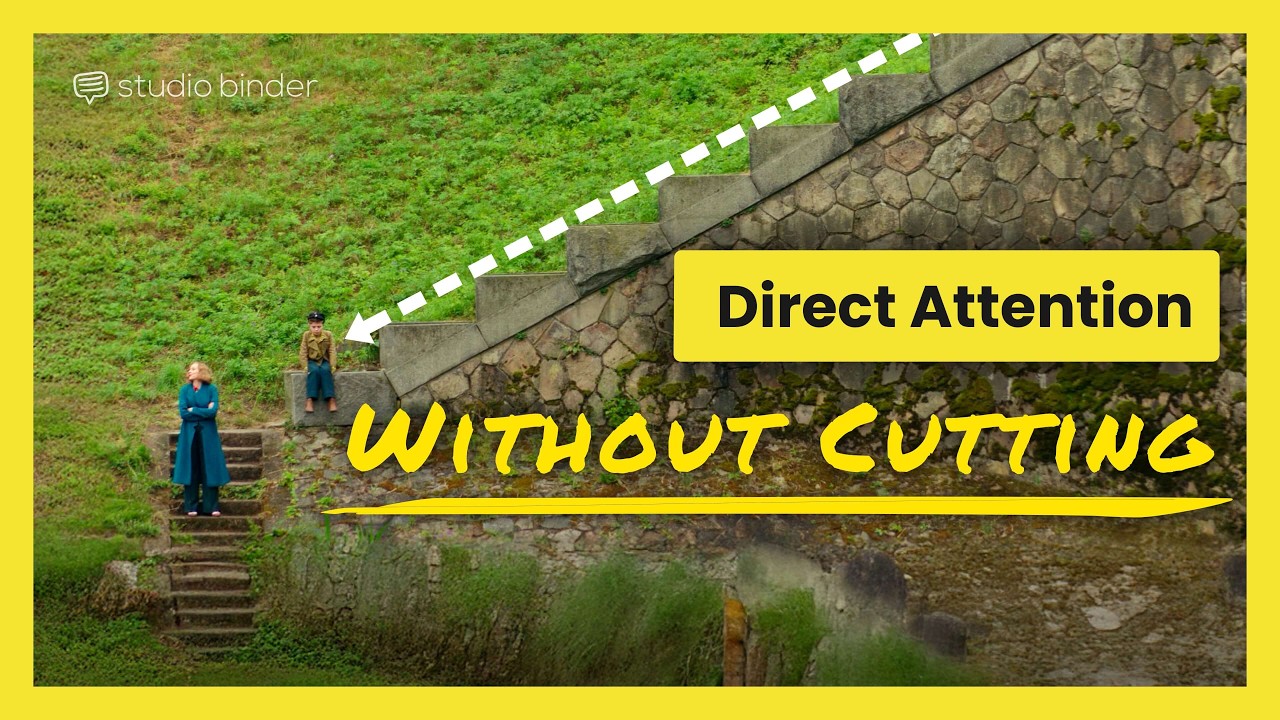
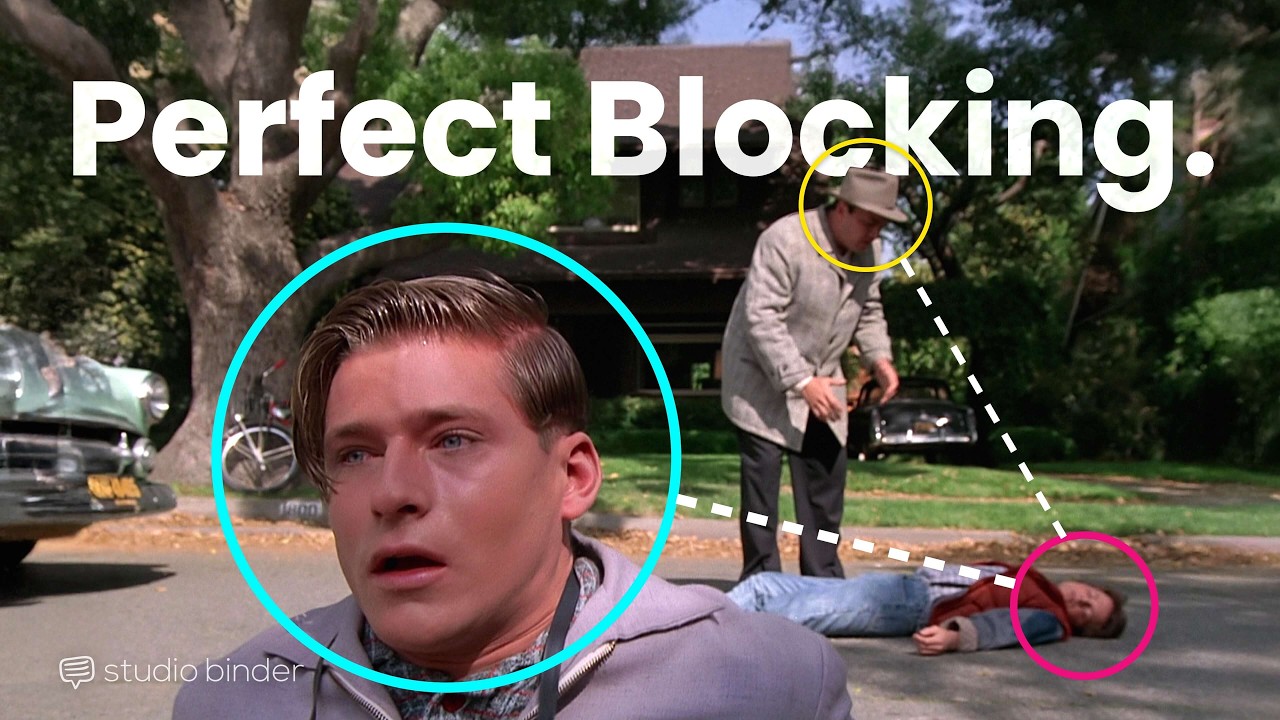
— So, you start kind of blending all this knowledge of people together. I know what I want. want to achieve. I understand the principles and yes I have enough technical knowledge and the rest is collaborators as well. — Now we need to — we're going to go fast. so fast. — Another way he allows for potential chaos is through his cinematography. I tend to use wide angle lenses because I tend to favor as much character as environment. In some ways, I want the context to be more important than the character. The context is informing so much about the character and about the thematics of what you're watching. I'm not saying that you cannot do that with cuts. You can also achieve that with cuts. I'm suspicious of what I call the master shots that are like look mommy no hands like a show off of virtuosity. They need to have a meaning. In my early days, I used to storyboard a lot more than anything because I was very insecure about of not doing the things right just because they inform not only for me because I maybe I'm clear more or less what I want to do. But the storyboard would inform the other crew members of what you're doing. Eventually, I start freeing myself from that because I started learning that I like staging. — Man down. — The exciting thing of working with actors and blocking and that's what other thing I like when shot deals because you have the flexibility to change things inside and dialogues and dynamics inside the frame. — Push out and push. — I started learning more and more that the best thing that can happen to you is a happy accident. Something that Yugu had not planned and that is one of those miracles that life just delivers. We prepped the shot like for 12 days and then we shot for two days but only there was only one take that was complete. That was the last chance I had to do that scene because we were losing the location and the sun was fading and suddenly blood spilling into the lens. That was completely not the sign. Actually the moment in which the blood is spilling to the lens I gel cut but there was an explosion so nobody heard me. And I realized that if they had heard me and they have cut, I was not going to be able to shoot the scene. So I just let it go. And at the end of the scene, Clive Owen and Emanuel Lubesque, cinematographer, they were so excited. And I said, "Yes, guys, but there was blood in the lens. " And the two of them, they turned at me and says, "But that was the miracle. " And then I realized it was true. It was about embracing those accidents, embracing those things that I could have never designed originally.

Takeaways

Guon doesn't take the job lightly. For the exertion of control and yielding to the chaos, one thing is for sure. — He gives everything he has to every project. — It's an intense experience. It's a long process, but also it's a process in which there's so many things that can go wrong. The biggest thing is that you know that whatever you do is going to be there forever. You're not going to okay, we change it tomorrow in the next performance. It's amazing, but at the same time, it's an intense process. When they ask me at the end of a film if I'm happy, I'm never happy. I'm relieved. You know, I think that if you ask a fox after being chased by hounds and then he goes to a refuge and says, "Are you happy? " No, it's this. The fox is relieved. Got away with it. Expectto patronum.

Другие видео автора — StudioBinder

Ctrl+V

Экстракт Знаний в Telegram

Экстракты и дистилляты из лучших YouTube-каналов — сразу после публикации.

Подписаться

Дайджест Экстрактов

Лучшие методички за неделю — каждый понедельник