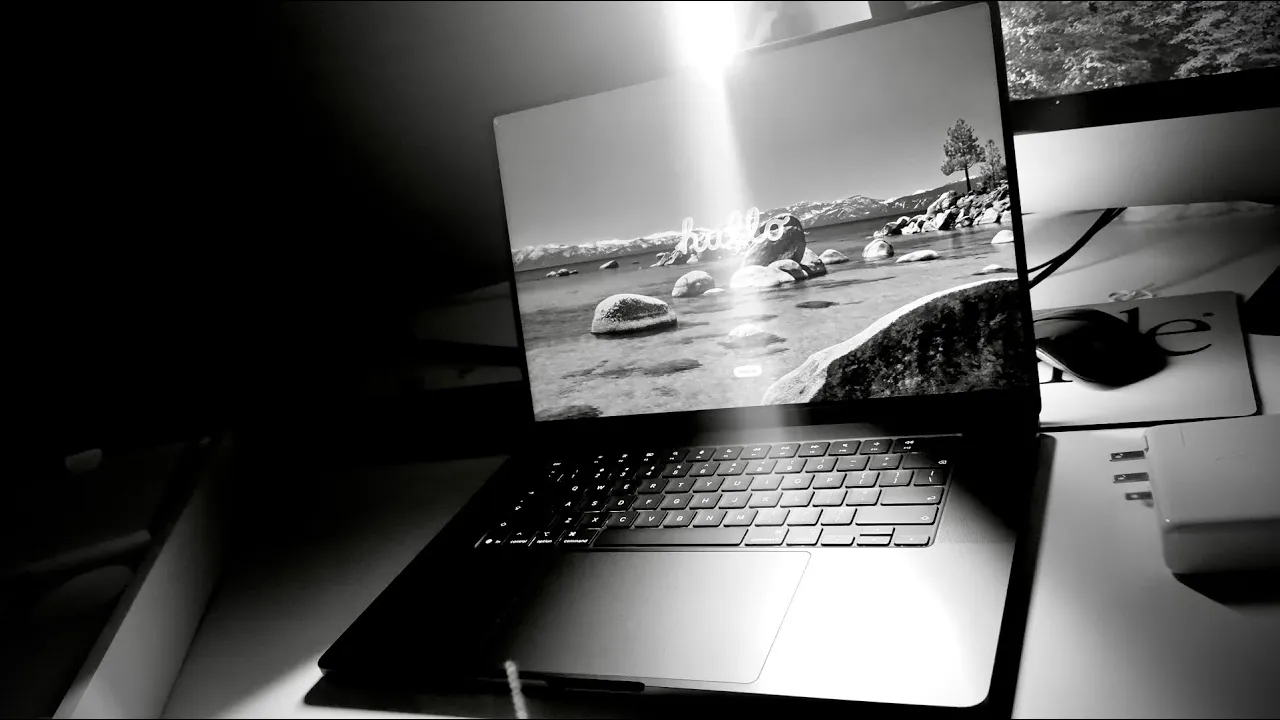
Render in thumbnail is from: https://x.com/cerpow
● Tailosive Tech Plus: https://www.youtube.com/tailosivetech/join
● Contact: https://x.com/tailosivetech
Intro chime by: https://www.youtube.com/c/RandyVazquez
Оглавление (2 сегментов)
Segment 1 (00:00 - 05:00)
All right, fine. I'll take the rage bait. There's been a ton of people complaining retroactively, I guess, about the European Union's decision to force Apple basically to switch to USBC on the iPhone. Even though that didn't really apply to the rest of the world. Everybody's still mad at the EU for Apple deciding to streamline the approach and have Type-C on the iPhones. I thought this is something we were over by now. It's been years. iPhone 18 is around the corner. We've had Type-C since the 15. Guys, just get over it. But in today's video, I wanted to explain the stupidity behind some of these dream renders people had of adding some version of MagSafe 3 to the iPhone. Let's begin. First off, I don't know if you guys were aware of this, but the iPhone already freaking has Mag Safe. There's a way better version of it that doesn't involve a wire at all. You literally just drop it on the charging stand or on the mount in your car and boom, it snaps into place and the phone's wirelessly charging. The coils are aligned perfectly. Every year, this charging method is getting faster and faster as is. And I'm not sure if you guys were aware of this, but the Mags Safe connector on the MacBook Pros that you love so much because we need another light in our bedroom that keeps us up at night. Yeah, that charge port on the MacBooks doesn't do data. Okay, so sure it may charge really fast, but if you wanted to do things like back up the phone manually or restore it or just move files onto an external SSD, you couldn't really do that with this version of MagSafe, to which people then respond, "Oh, okay. Uh, they could just design a different version of it so that it could support data. " How many freaking wires are you trying to make people buy these days? Oh my god. The transition to Lightning was met with so much frustration because of how many 30 pin accessories everybody had. Thank god that when we switched to type-C, it was a cable that most people already had access to because they needed it to charge their iPads or their Android phones or their MacBooks because that was the primary MacBook charging method for years and years until this redesign came in and brought back MagSafe. I also don't find it particularly convenient. I mean, what is the use case you're trying to argue with this type of MagSafe being on an iPhone? You know, I'm not even a big fan of it on the MacBook because I like to charge from either side, left or right. I like being able to pack one charger with me when I go on a trip and know that I can charge nearly all of my products with that one cable. Mag Safe kind of doesn't support that idea. But I will at least confess that at least on the MacBook, that's something that might spend a lot of time in the same place, whether it be on a desk or a counter or a table or something, and you just want to grab that cable, hold it somewhat close to the charge port, and let go. Boom. Now it starts charging. But that's not the case with the iPhone. It's far more of a mobile product. You're on the go anyway. Meaning that if you were charging your phone with this connector, like on a bus or on a train or on an airplane or in the car or something, you're still going to have to grab both devices. It's not like a laptop where it's just going to sit there for a while. You're like, "Oh, hey, let me grab the cable, hold it close, click. " Now, with the iPhone, you'd still be grabbing your phone out of your pocket and grabbing the cable and holding them close together and hoping you don't dislodge them accidentally when moving the phone around and when you tug on the cable and you're placing it in different places like that. Again, this is a complaint I already have with MagSafe on my MacBook. If I try to charge it like that while I'm watching a movie in bed or something, it's much easier to disconnect the cable because it's magnets, right? So, it's always trying to pop off. And I don't really have that problem with type-C. Nor do I really subscribe to this imaginary scenario everybody keeps coming up with where you're stretching your cable all the way across the room in some kind of common walkway and people are walking by your laptop and tripping on the cable and pulling the laptop and slamming it on the ground. This has literally never happened to me and I don't believe the people that say it's happened to them. First of all, I tested this way back in the day when I had my 2016 MacBook Pro which only had USBC. Oh, look. Nothing happened. And guess what? The type-C connector is not that strong and robust. I mean, it is stronger than MagSafe in terms of the physical connection. And it would not be the same story with the iPhone because this is substantially lighter than a MacBook. There's a good chance that if you put the same kind of magnets that you put on the MagSafe connector on a Mac, on an iPhone, it would still probably pull the phone with it because it's so much lighter. or you would have to weaken the magnetic connection to the iPhone so much to the point that it would fall off all the time. It would be super annoying and you'd probably dislodge the charging cable unintentionally all the time. And again, just use the MagSafe puck on the back. It is so much infinitely easier than grab both devices, you know, the wire and the phone and hold them together perfectly and you're not getting data through that. Now, all of those arguments aside as to why the MacBook version of Mags Safe on the iPhone is a bad idea, I also disagree with the philosophy behind this idea where so many people are saying, "Well
Segment 2 (05:00 - 09:00)
because the European Union forced Apple to use Type-C, now Apple cannot come up with a better connector of some kind to switch the iPhone to. " Guess what? They came up with better connectors multiple times. Whether it be USBC, which they put on MacBooks since 2015, over 10 years ago, and the iPads, which still use them to this day. But even Lightning had a better version than what they ended up putting on the last Lightning iPhones. Way back in 2017, they came up with Lightning 3. 0. It was the exact same connector. It was still reversible and everything, but it supported USB 3. 0 speeds. Okay, so technically on those 2017 iPad Pros, they had the Lightning 3. 0 0 connector, which supported faster data transfer speeds and was backwards compatible with all our old Lightning cables. And guess what? They never put Lightning 3. 0 on the iPhone. Yes, even if you spent over $1,000 on your iPhone 14 Pro Max a few years ago, you were still stuck with good old Lightning 2. 0 speeds, something that a 2017 iPad Pro could smoke with the same sized and shape connector. So before you all go out claiming that Apple could have made charge ports way better, but the EU restricted them, no, Apple had better ports, they had better connectors they could have switched to, and they actively chose not to. And frankly, USBC was the far better connection that can do far more than lightning and does, thanks to Apple actually including, at least on the Pro iPhones, USB3 speeds, which allow you to write log videos directly onto an external SSD. Goodbye that use case. if you tried to use MagSafe 3 on the iPhone. And the main reason I really prefer USBC over MagSafe or Lightning comes down to it being bilateral, which saves me a heck of a lot more time than trying to align the port so perfectly. Again, you don't have to worry about that with the ring on the back. But with a USBC cable, you don't have to check either end of the wire. Oh, do I plug this one into the brick or brick? No, it doesn't matter. You can plug in either end of the cable to the device and then you're done. you don't have to worry about it. Not the case with Mag Safe. It's not bilateral, nor was Lightning, making it less versatile, less practical, requires more checking, and requires more packing because I don't like the idea of needing a different wire for every single device I pack in my backpack. So, while I don't agree with everything the European Union has ever done, I do think forcing Apple to switch to Type-C was actually the best thing the iPhone had going for it that year, and I'm grateful that Apple decided to keep that universal. So now all iPhones and Androids are using the same charge connector. And if you want something more convenient and easy, you got some magnets on the back to align those inductive coils perfectly every time. That's the way MagSafe is meant to be on an iPhone. And the overhead unlocked by USBC is absolutely insane. This connector is capable of doing 240 watts, something that the iPhone is clearly not even close to maxing out. Our MacBooks max out at like 100 watts, and the type-C connector can more than double that. And if they wanted to, they could theoretically cram 80 Gbits per second through this connector, which currently they can't because of the limitations of the read and write speed on the nans in our phones. So, don't act like they could somehow switch to something else that's not USBC that would allow for faster data transfer speeds or faster charging. No, we're like not even at a tenth of the limitations of the type-C connector. plenty of overhead they have to work with here and they're not maxing it out. So, frankly, type-C best connector. Apple actually helped design it, by the way. It's not some third party government design. Apple actually worked really, really hard on type-C way back over a decade ago. And the EU just nudged them in the right direction and said, "Hey, this is a good connector. You should use that on more things so we reduce e-waste and we make charging for all of our devices far easier. " Do you disagree with me? Put your wrong opinions down in the comments below. I'm not going to read them. And thank you to everybody supporting this channel directly. It seriously helps us out a ton, as does just watching these videos. So, thanks again. Have an excellent rest of your day.